I started my career as a software developer, writing assembly-level software for military airplanes. (Avionics and cockpit displays, including what you see in aircraft today.) I was always interested the the entire end-to-end software deployment, from initial requirements right through and into operations and production.
So naturally, it’s time to apply that end-to-end curiosity to what I work on these days: eCommerce.
After spending the better part of two decades in eCommerce, I’ve decided to take a peek behind the curtain. What do I mean by that, you ask? Easy. I’ve always been laser-focused on things like, web site performance, user experience, mobile applications, digital marketing campaigns, SEO, PPC, e-mails, campaign launches. I mean anything that would get a user/customer to click the “order” button and complete the purchase.
But now that there’s a level playing field from a web performance perspective and just about every digital agency and online seller runs the same type of playbook from a marketing campaign perspective, how does Amazon continually stay on top and hold everyone else at bay? (And, yes, I know that some folks will not agree with me about the level playing field from a web performance/UX perspective, but the numbers don’t lie. All the big online sellers are bunched at the top with not much separating them.)
So, what separates them? Sometimes, the answer just stares right back at you, it’s so obvious.
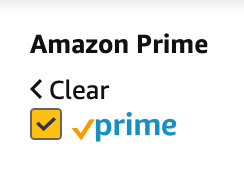
And there it is.
So while all the focus has been on, “I want my customers to be able to BUY IT fast”, most on-line purchasers are now focusing on, “I want to GET IT fast”. (I mean, admit it, how many of you check this box IMMEDIATELY when going online to make a purchase? Come on, show of hands….I thought so. Yeah, I do, too.)
So, what’s behind the curtain?
The supply chain. Logistics.
The back-end of the process that completes the definition of business logistics.
The definition I’ve heard many times over the years, but had never concerned myself with the end-to-end component of it, that being the process after purchase. The definition: “having the right item in the right quantity at the right time at the right place for the right price in the right condition to the right customer”.
So what does all this entail? It’s all about connecting the data and getting it to the right person, at the right time. What kind of data?

Commercial & Master Data – Purchase Orders, Commercial Invoices, Product/Item Masters, eCommerce orders & delivery, Shipment Status updates, inventory updates
Finance – Freight and Audit Pay, Accounting & General Ledger transactions
Freight & Logistics – Booking & Load Tender, Advanced Shipment Notices, Shipment events and milestones, Customs entry details, Document attachments
So, why now?
This part’s an easy question to answer. If I’ve seen anything over the past 3-4 months, it’s that eCommerce is changing forever. Because of COVID-19, eCommerce is booming. (See 2020 Q1 growth of on-line eCommerce Sales: https://bit.ly/2N5Kodb) This is a milestone change that is unlikely to revert back to pre-COVID-19 days.
What has this done? It has put a huge stress level and focus on the supply chain and logistics processes. Everyone reading this saw it first-hand.
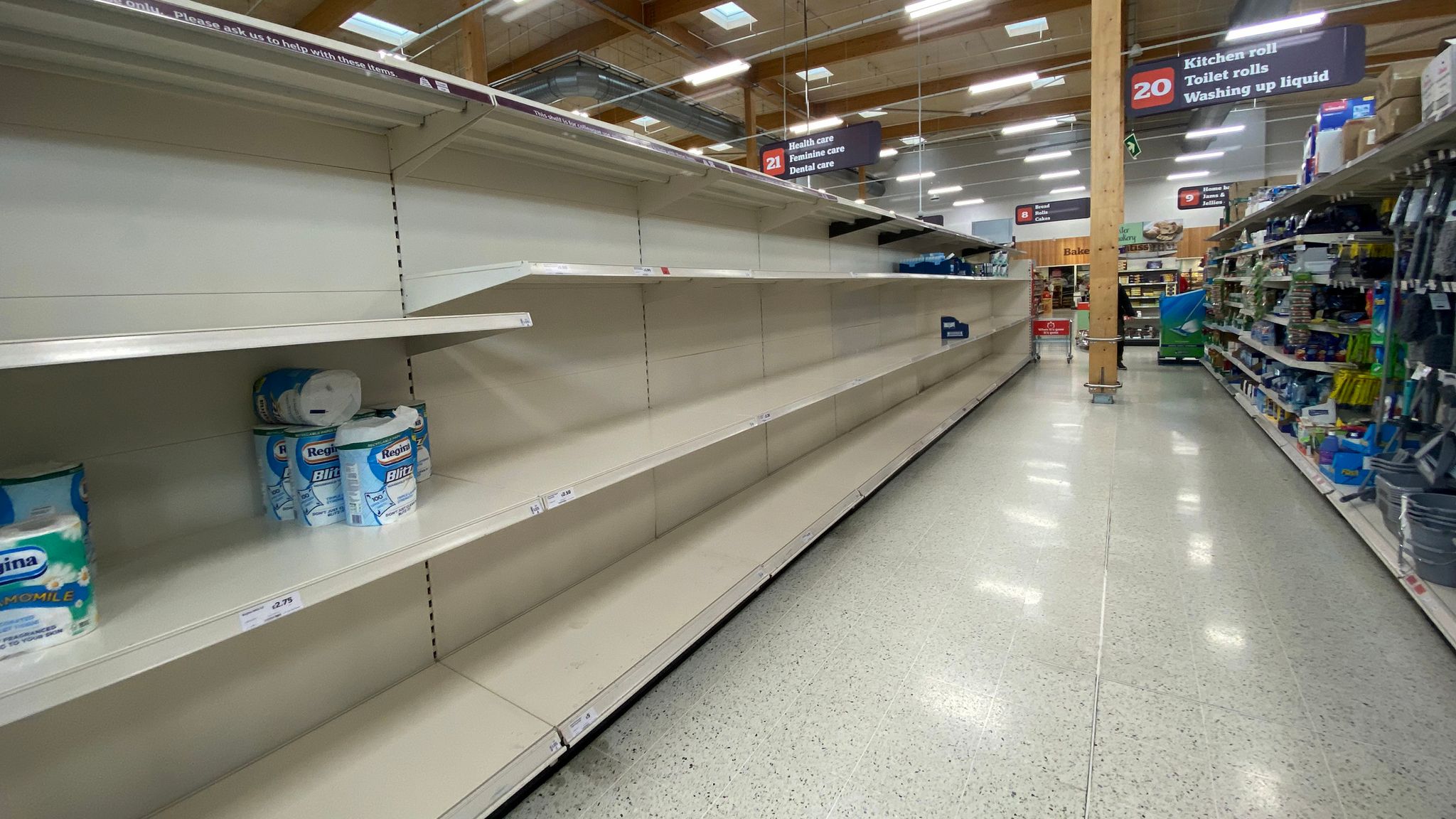
Anyone still seeing the empty shelves where toilet paper should be?
The infrastructure and back-end systems and the information and data contained in these systems has not had the investment around it to handle the increase we are now seeing, and will continue to see, in eCommerce growth.
The critical need – especially now – is for real-time data sharing across supply chain partners.
Hence the opportunity I saw and why I joined the Chain.io team.
So, what does Chain.io do?
The Chain.io supply chain integration platform represents a new approach to an age-old supply chain question. “How do we make all of these systems and people work together?”
The Chain.io cloud-based platform solves these problems using an open application programming interface (API), developer friendly tools, an expertly developed data model, and event driven behaviors to make connecting and coordinating systems and people easier than ever before.
The platform uses complex, next generation technologies like data graphs, and Artificial Intelligence (AI) without all of the heavy lifting involved in most supply chain integration projects.
Takeaway
COVID-19 accelerated eCommerce growth significantly in a 3 month period of time, forever changing the way consumers shop, and put a spotlight and strain on the supply chain and logistics processes. This consumer pressure is forcing the industry as a whole to look at improving the technology and processes that make up these areas.
Optimizing these processes is no longer a “nice to have”, it’s a MUST HAVE that directly ties to bottom line revenue, complete with it’s own measureable ROI.
Many retailers are falling by the wayside and are not expected to survive. Many of those never got fully ahead of the consumer eCommerce purchasing wave to begin with. The ones that are surviving are putting renewed focus on supply chains and logistics.
If you’re in eCommerce, hop on.
Should be a fun ride!
Or, as Herb Brooks once said, “Great Moments are born from great opportunity.” –1980 US Olympic Ice Hockey Team, pre-game pep talk.
 Dan Boutin's eCommerce Blog